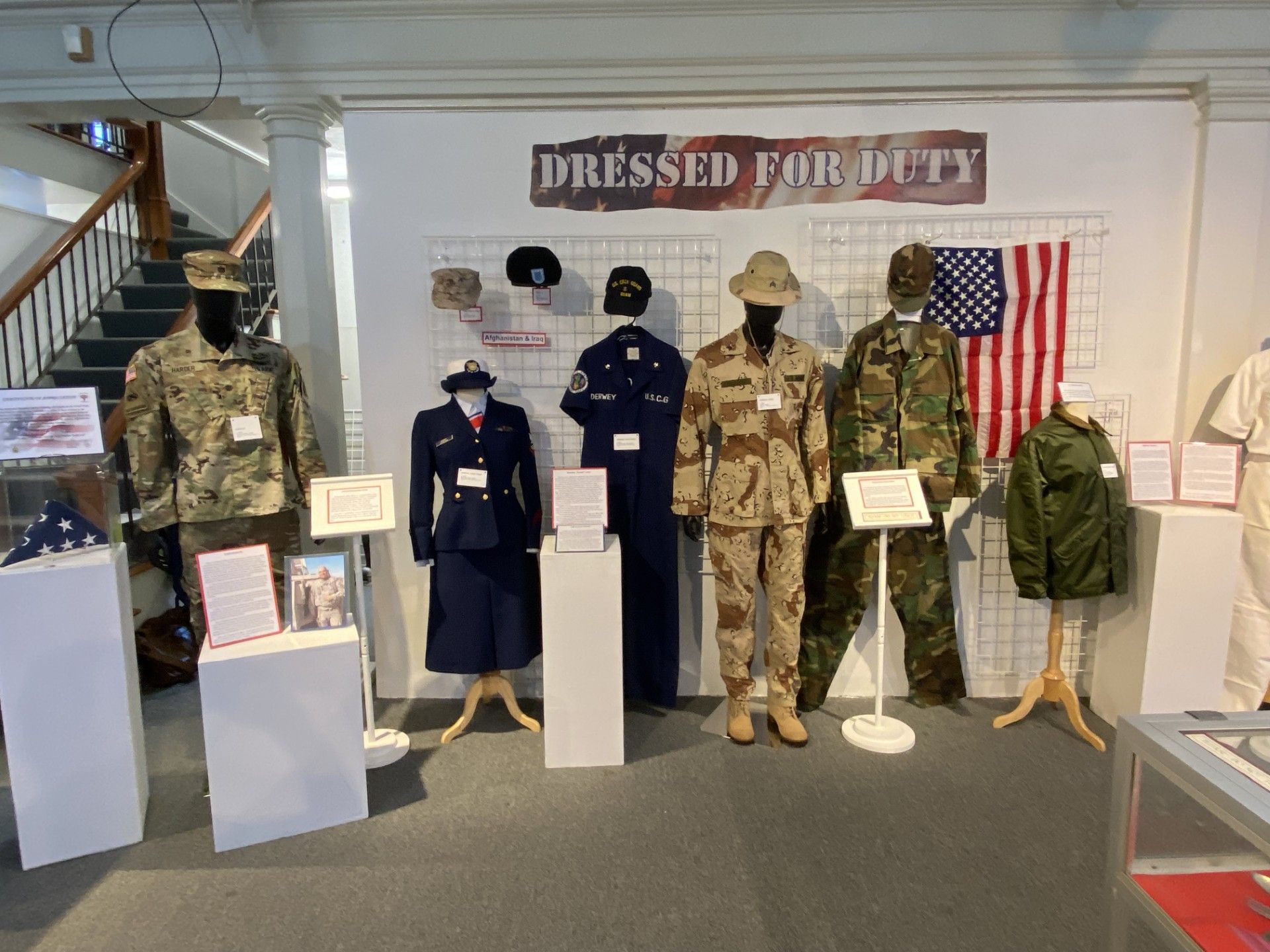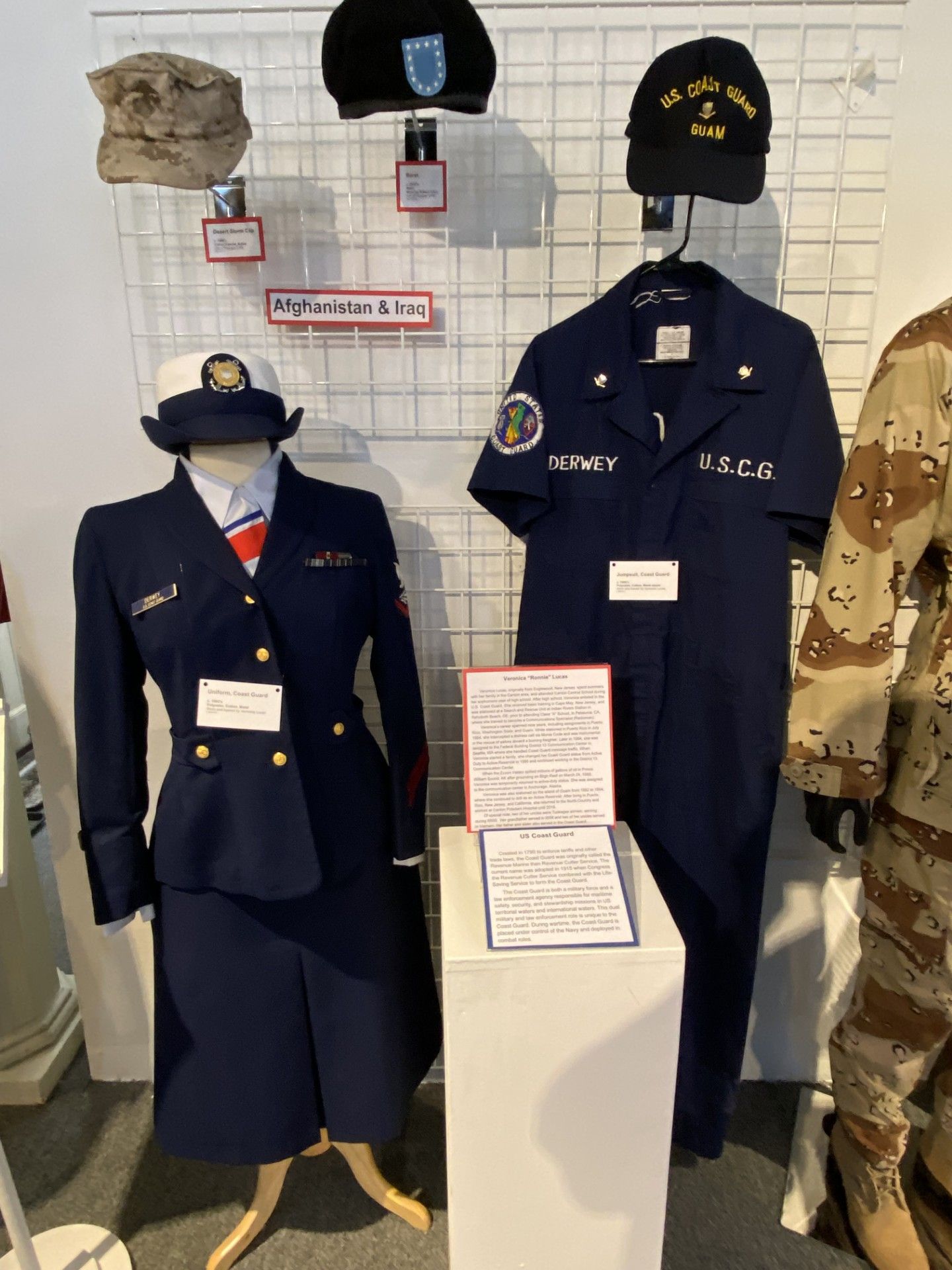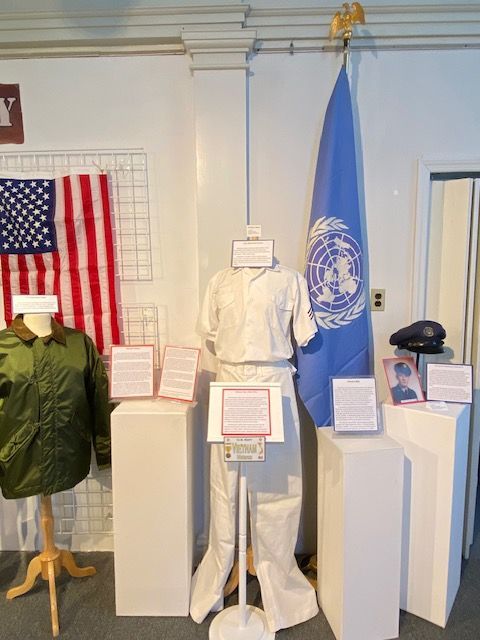
Dressed for Duty
250 Years of America in Uniform
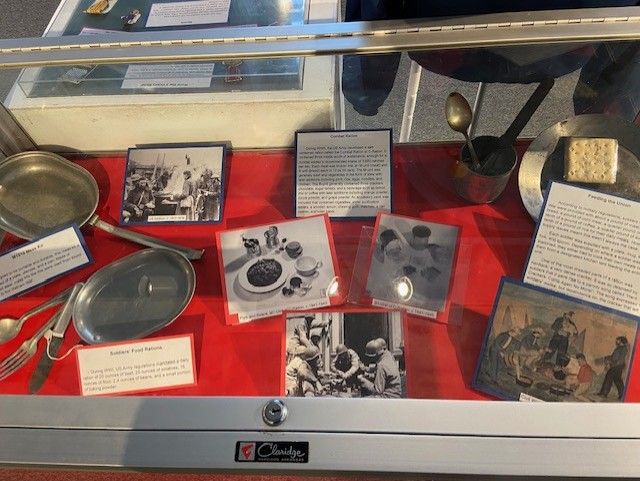
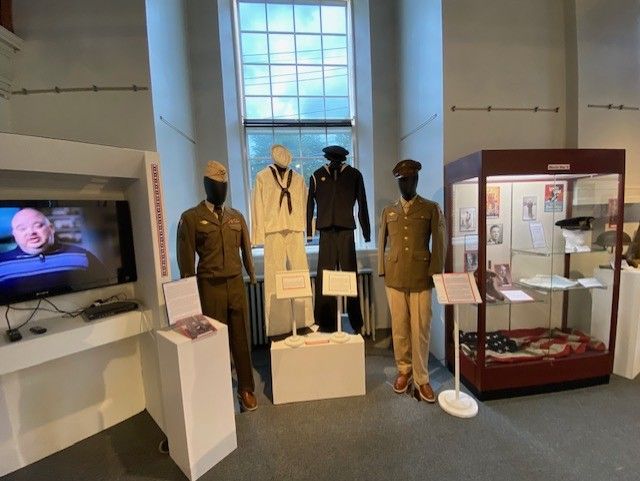
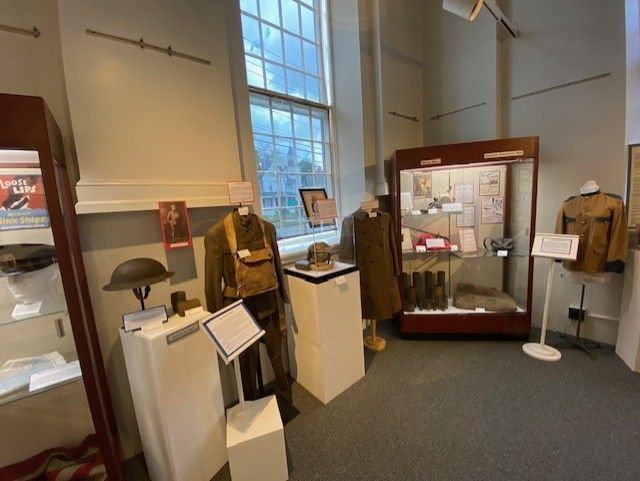
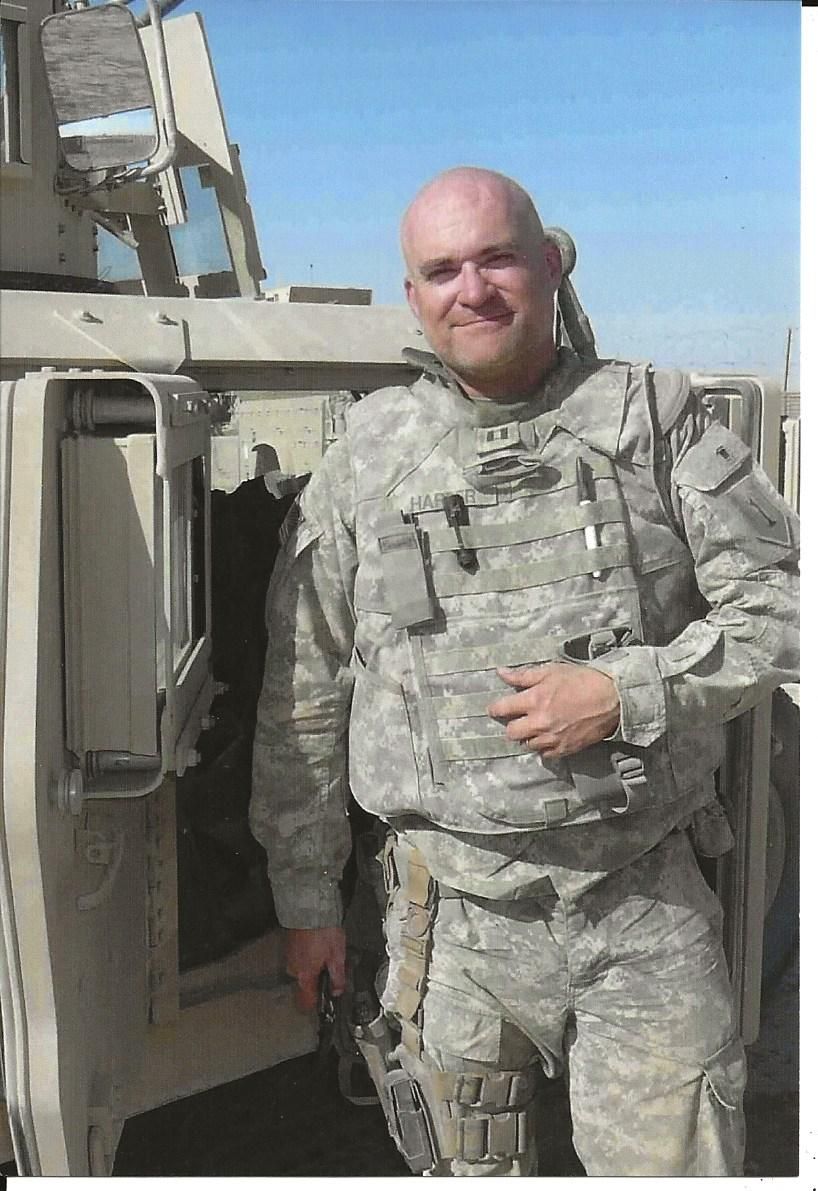
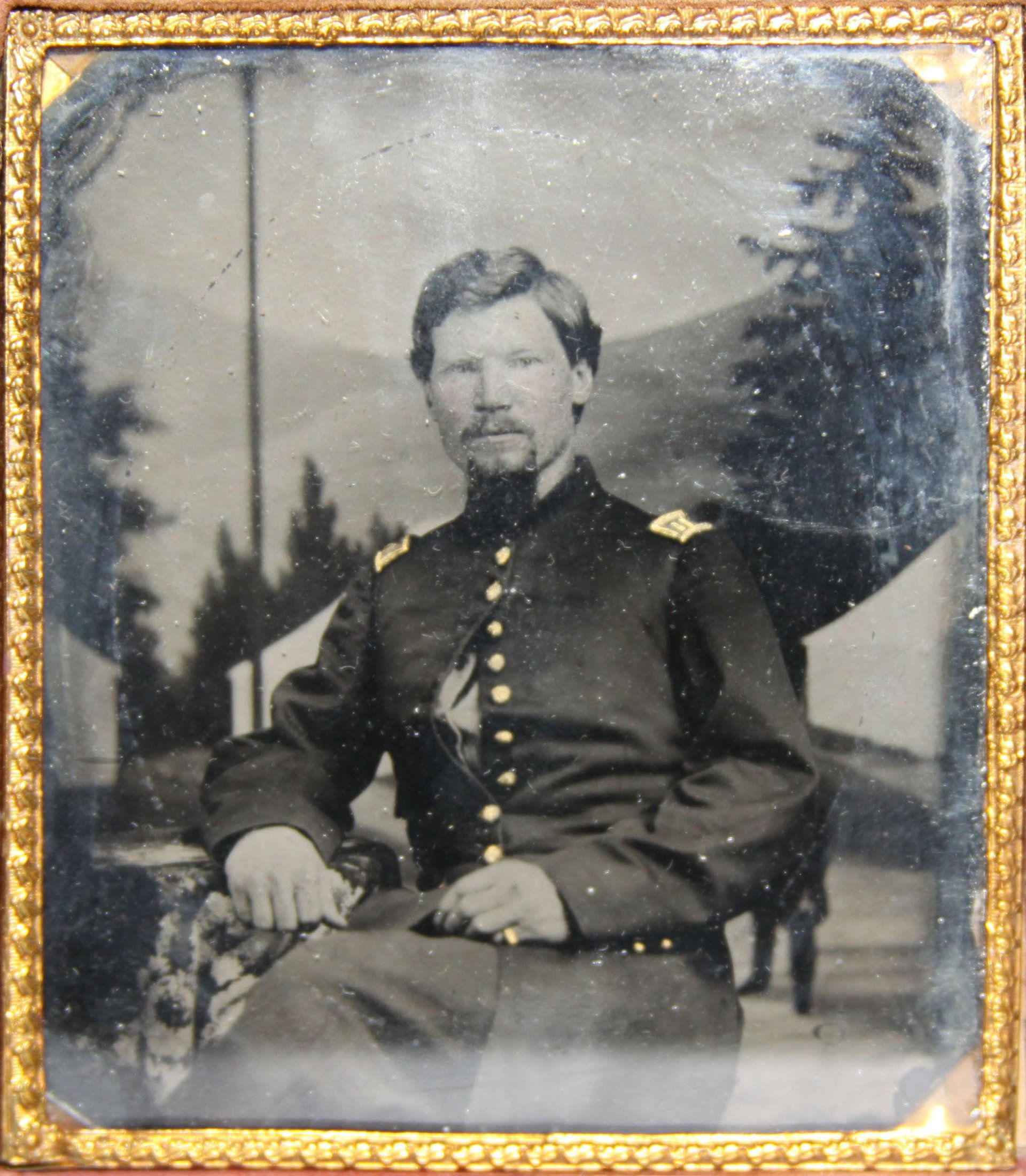
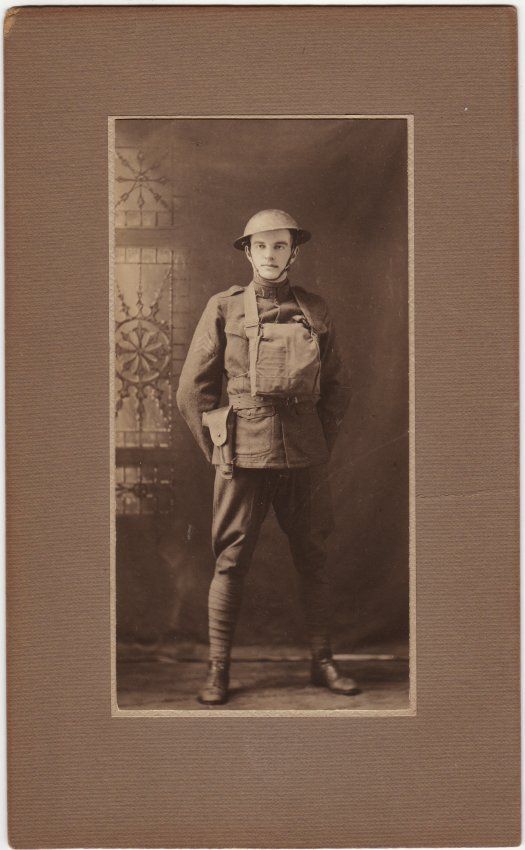
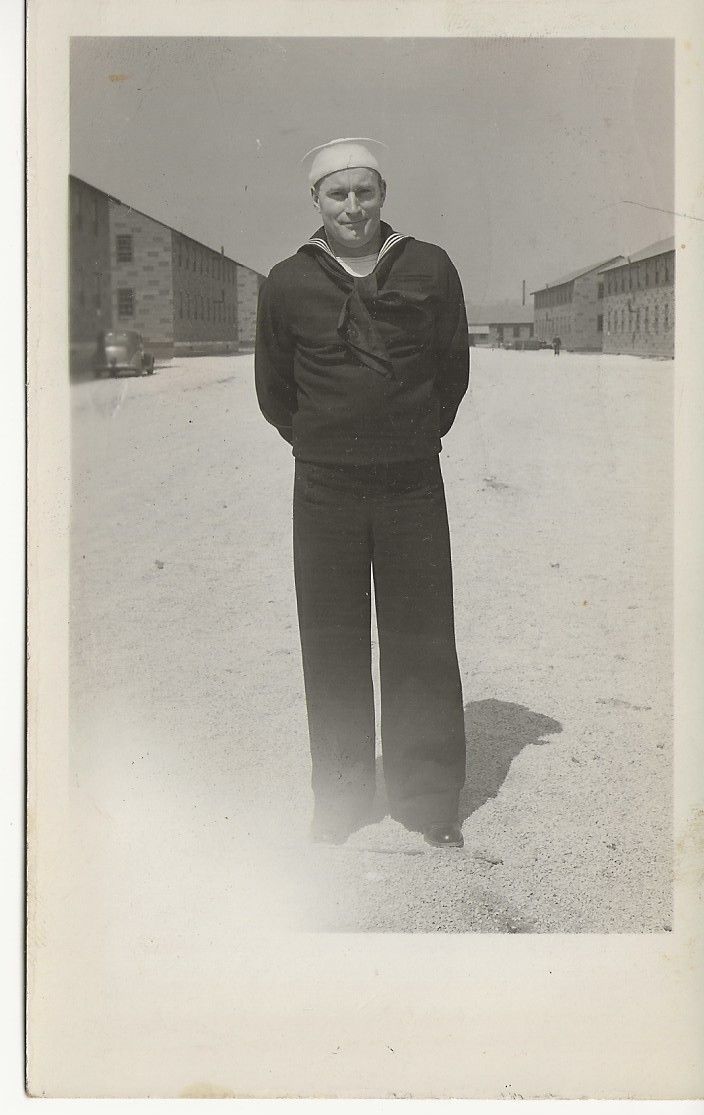
Dressed for Duty explores the uniforms and motivations of local people who served in the United States' armed forces from the American Revolution to the modern day. Equipment and other items used by soldiers offer insight into the struggles and dangers of military service. This exhibit commemorates all who served their country as we celebrate the nation's 250th anniversary.
Veterans
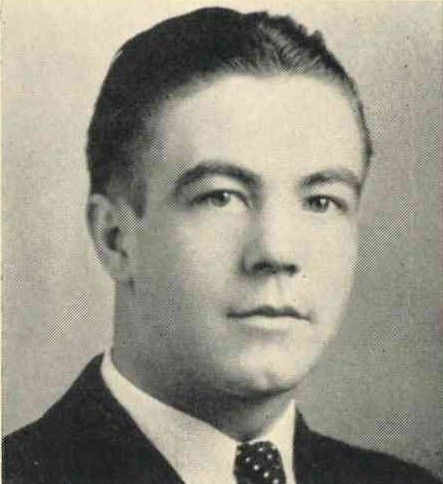
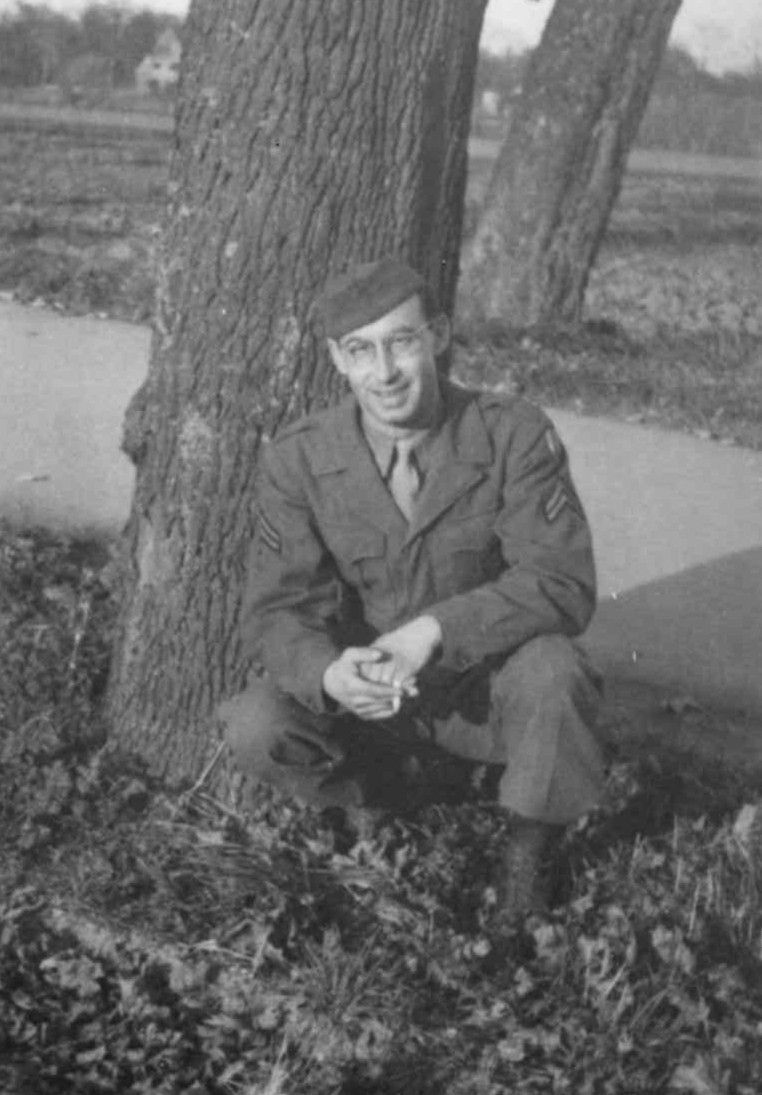
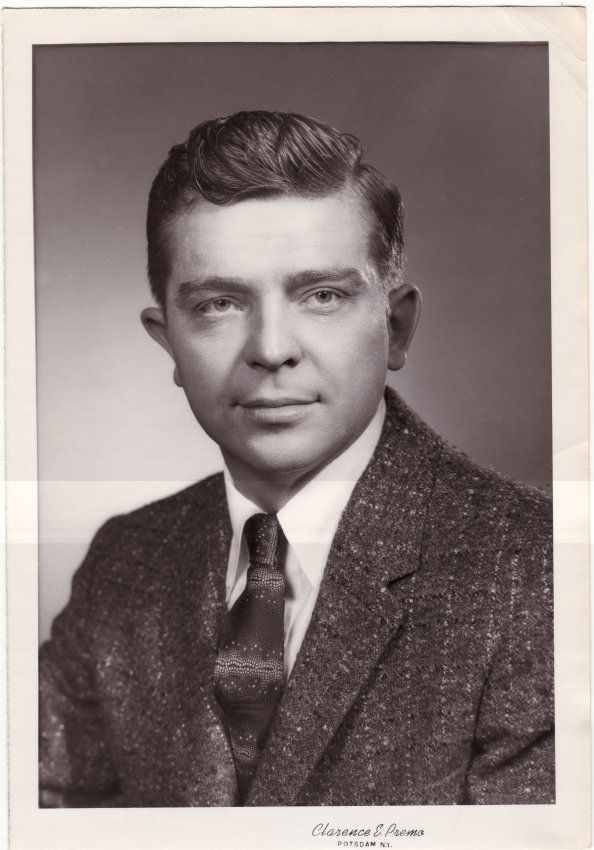
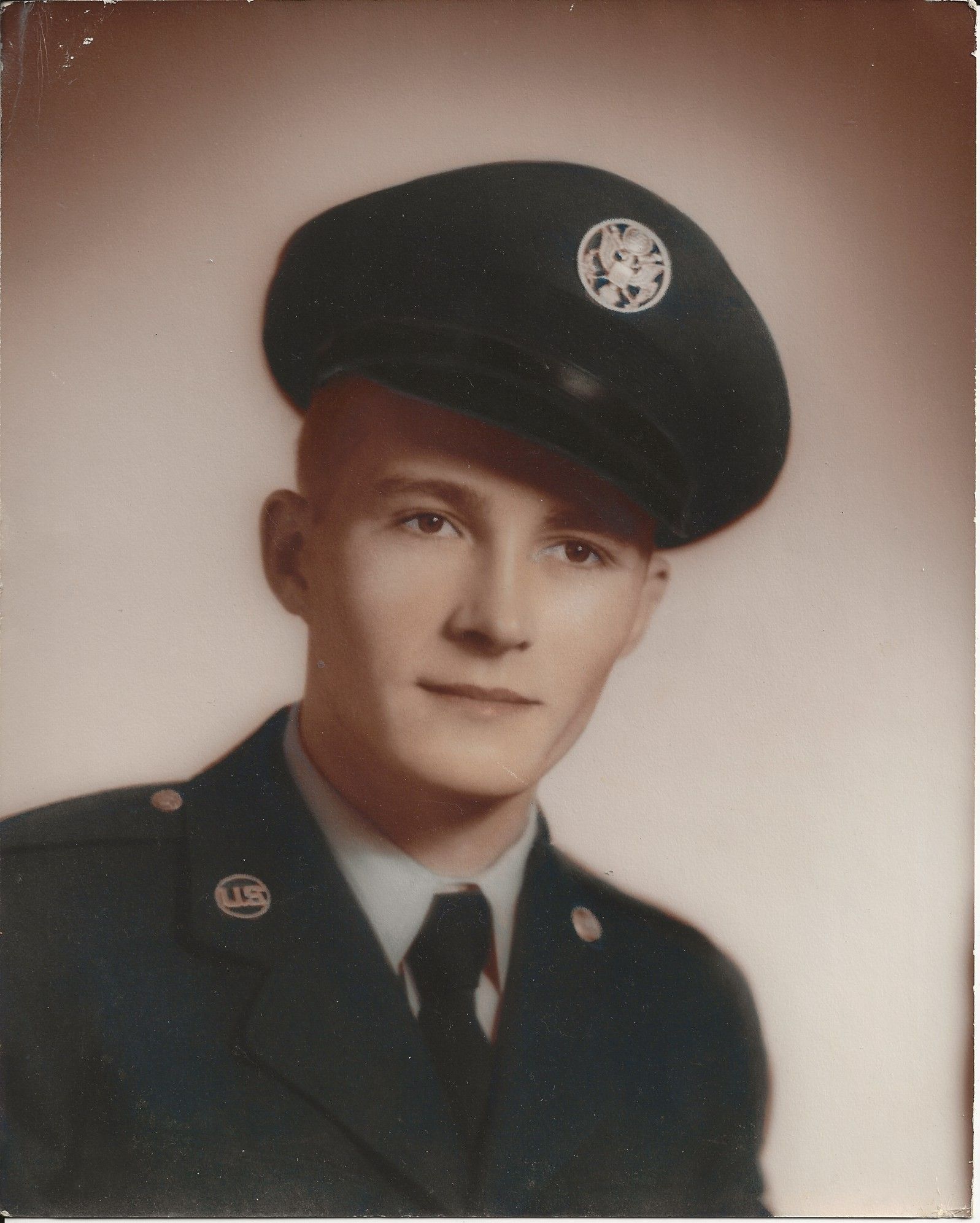
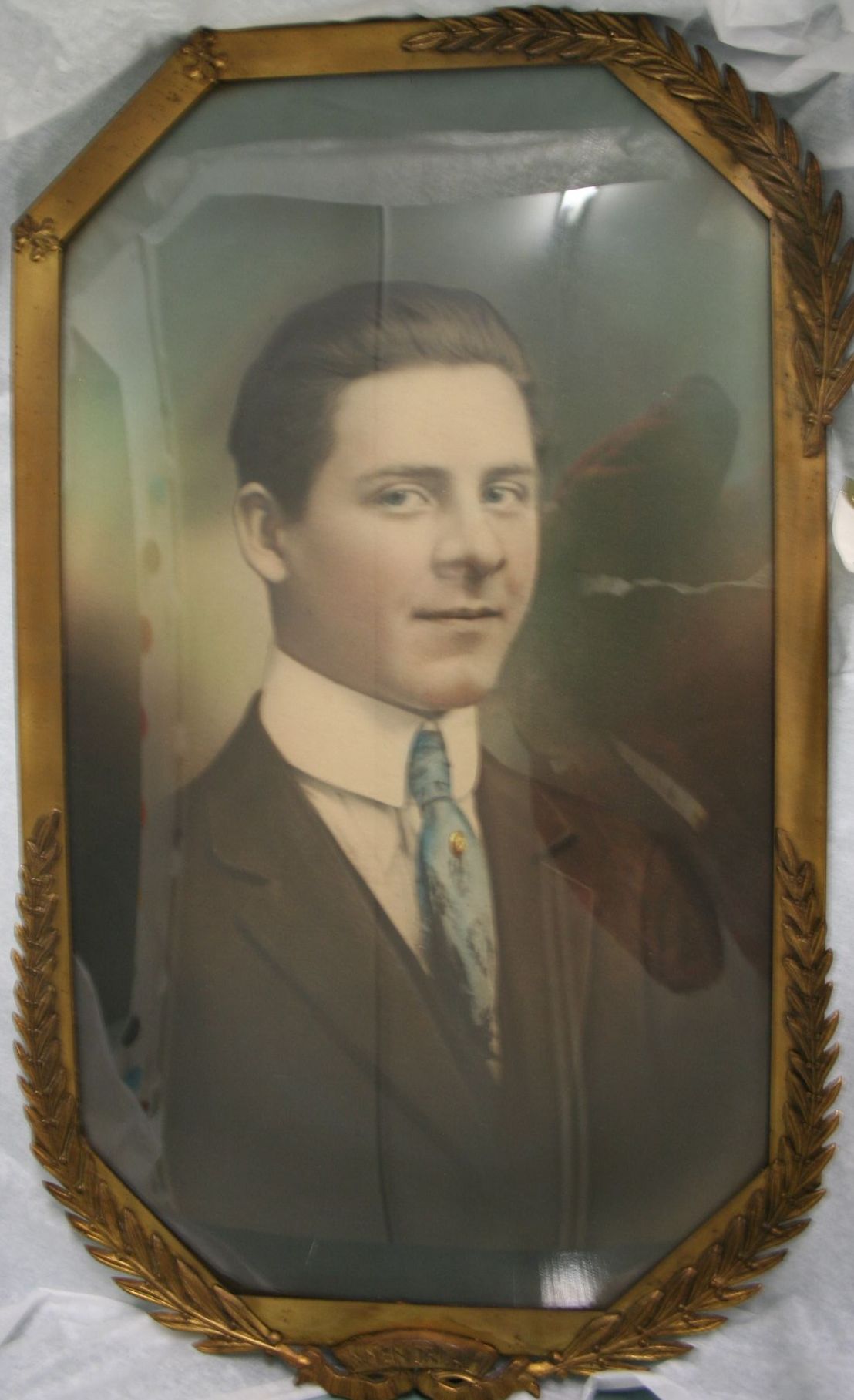
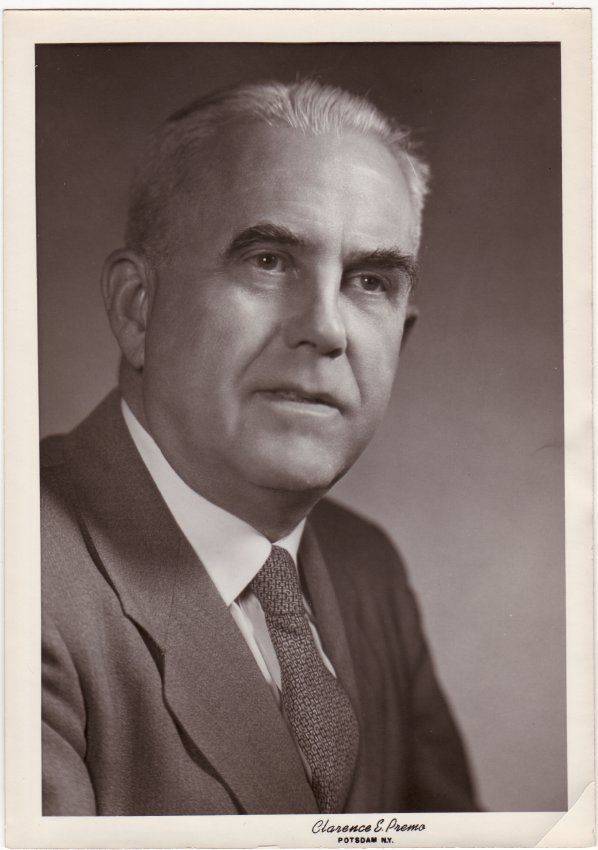
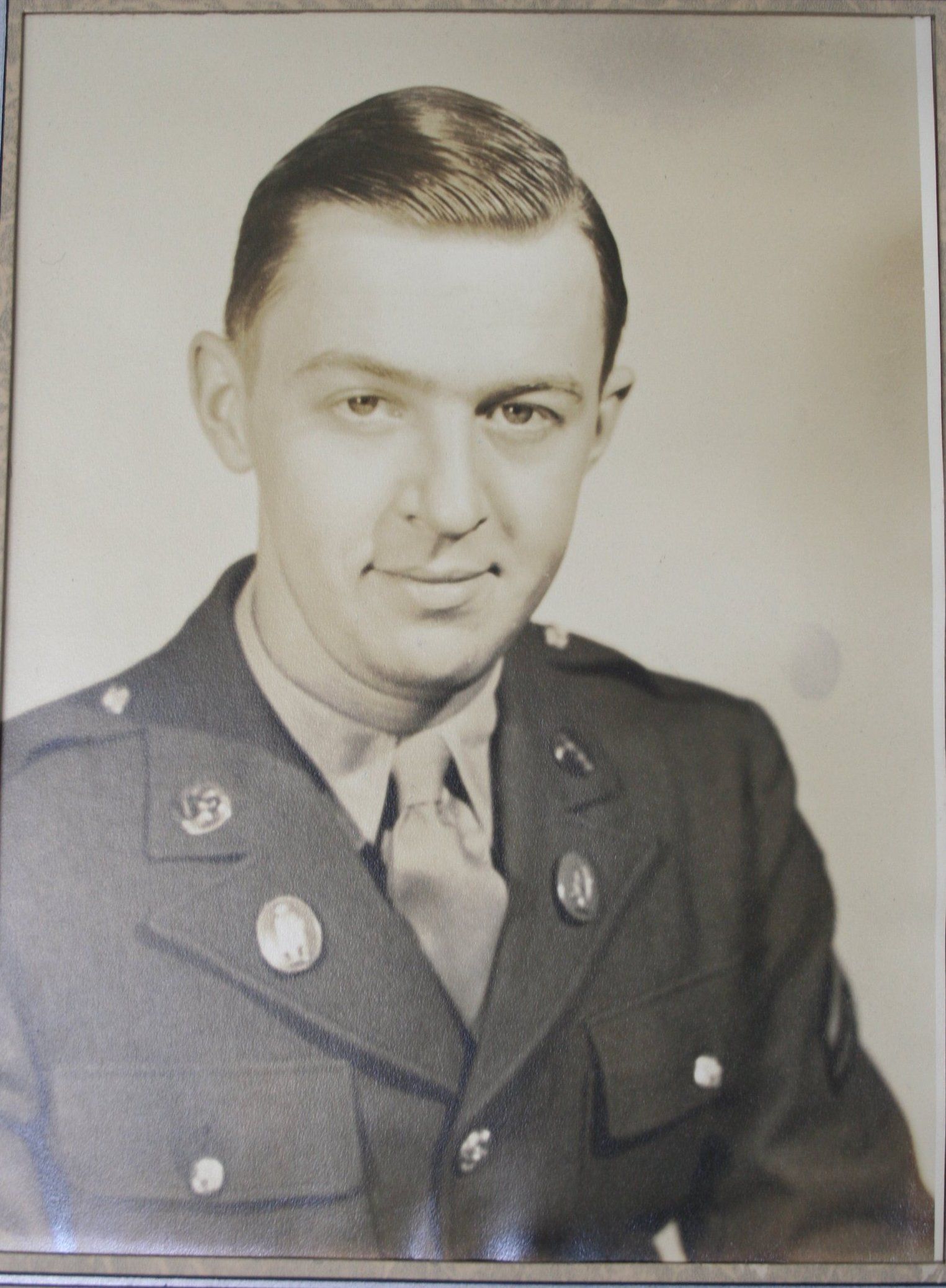
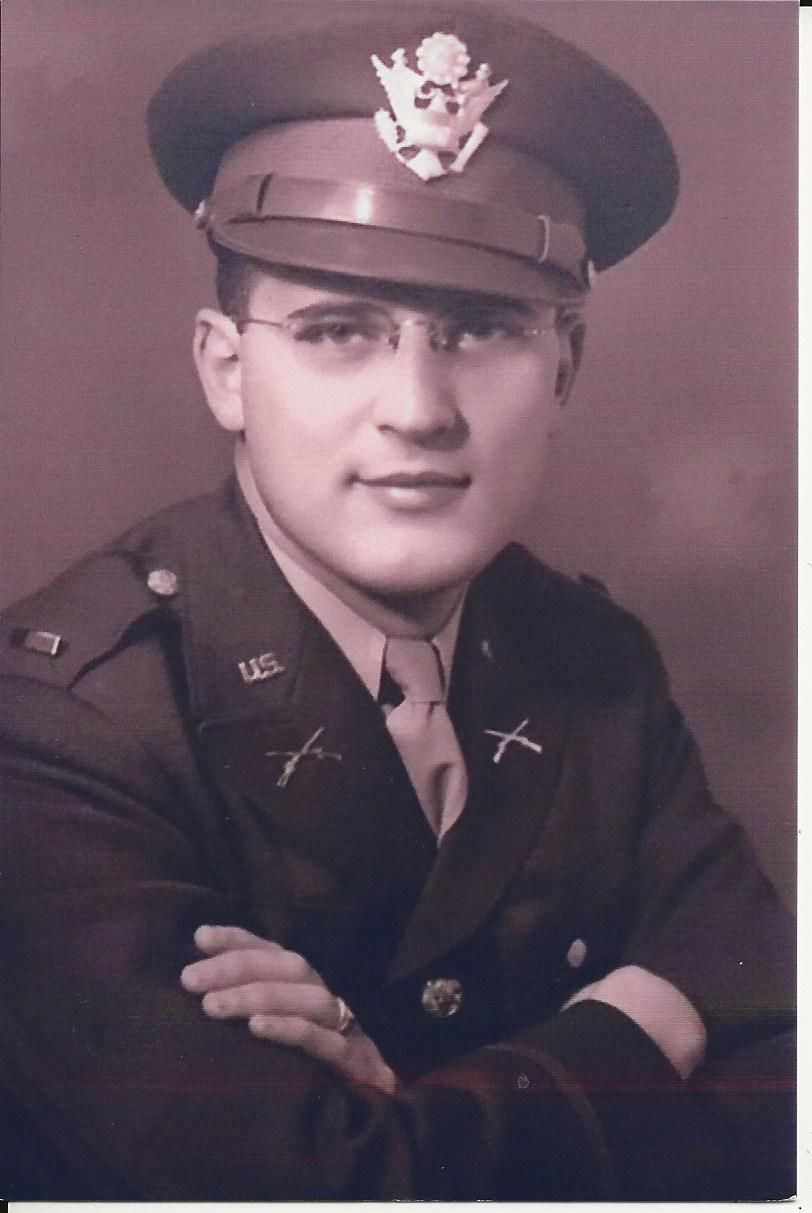
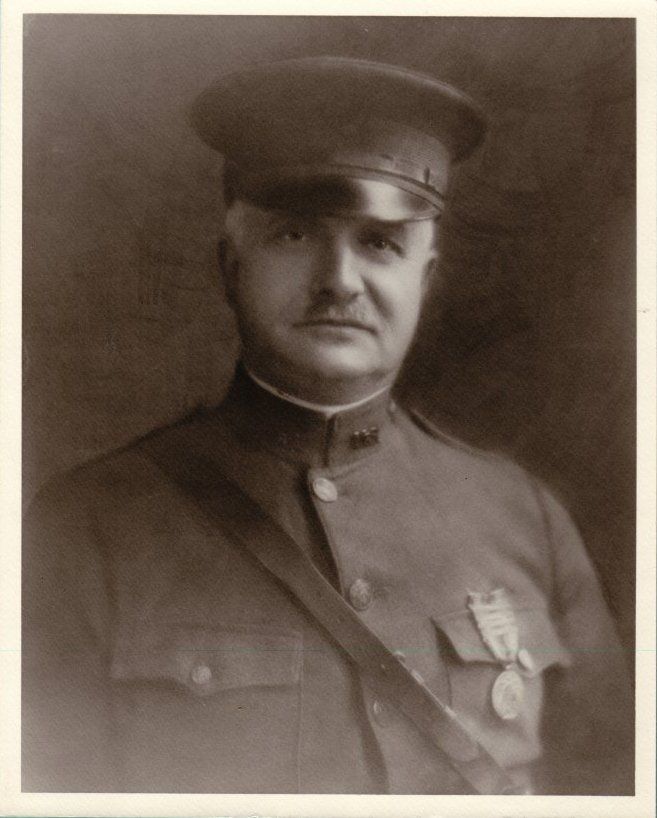
Potsdam residents have served in every major US conflict from the Revolution to Afghanistan.
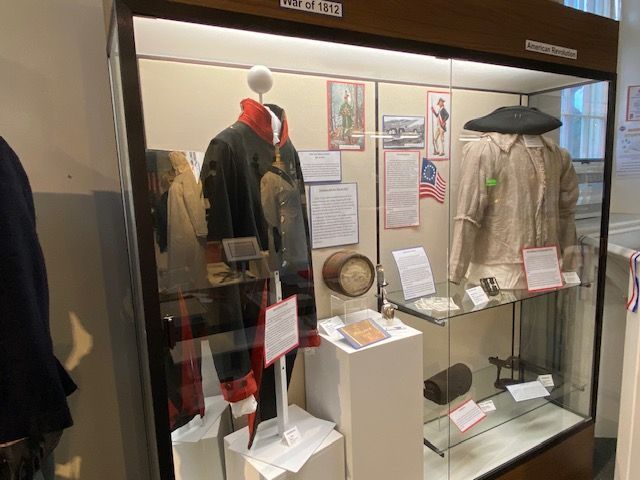
At least forty-four Revolutionary War veterans settled in the town of Potsdam and are buried in local cemeteries. Some of those same veterans served with their neighbors during the War of 1812 as part of the local militia.
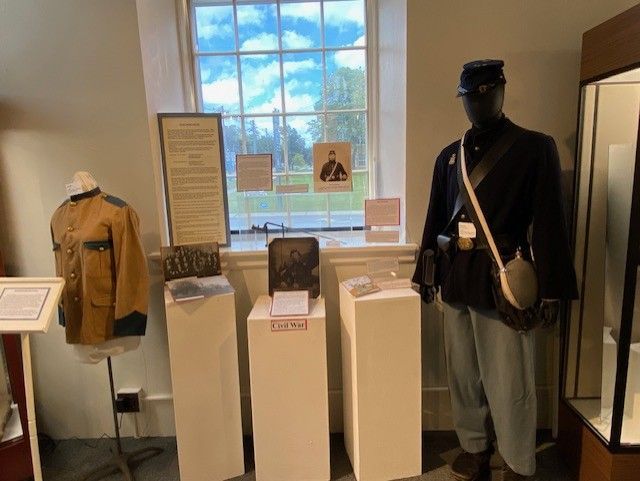
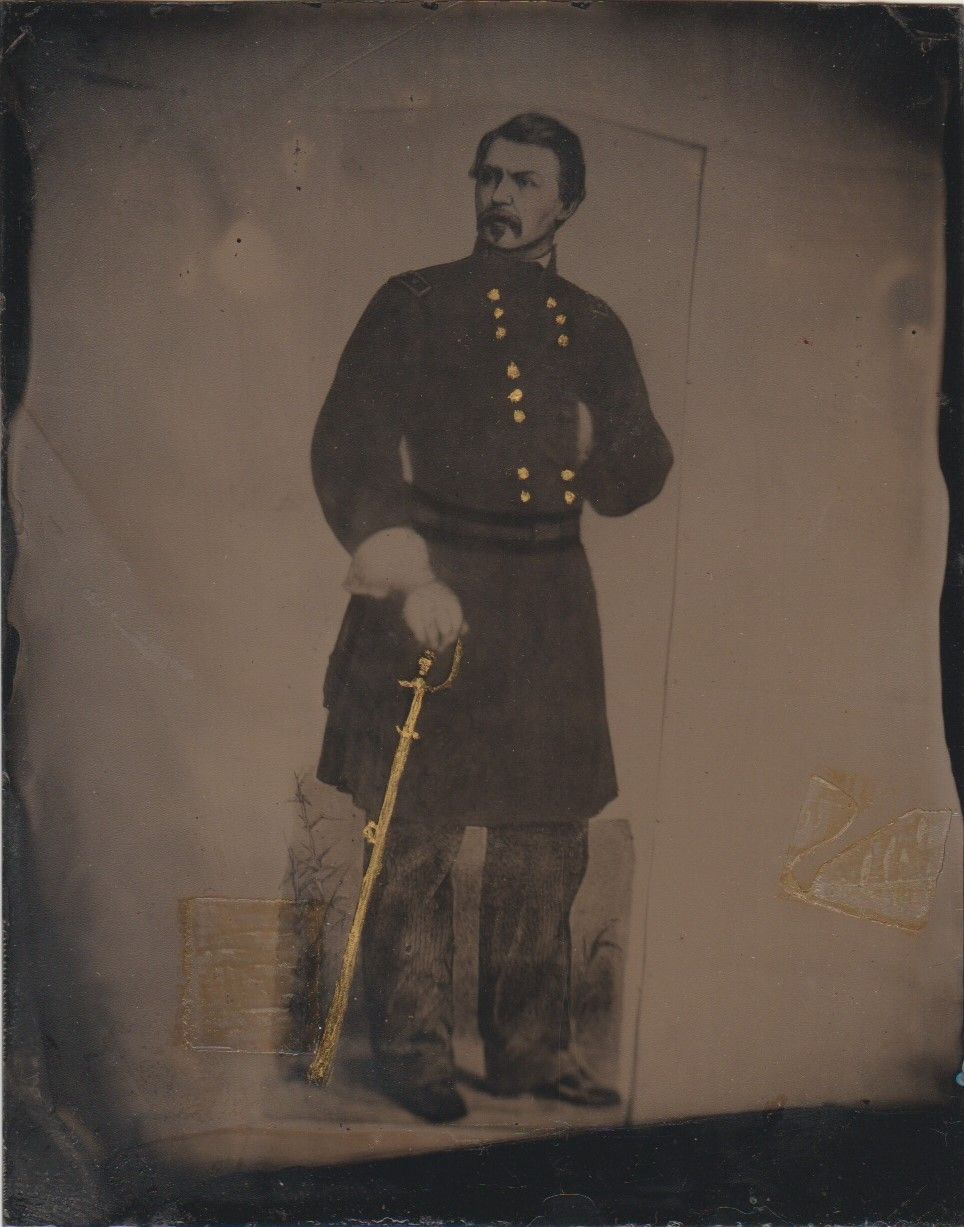
In the Civil War, around five hundred local residents served in Army and volunteer regiments.
During World War I, over three hundred local residents were drafted.
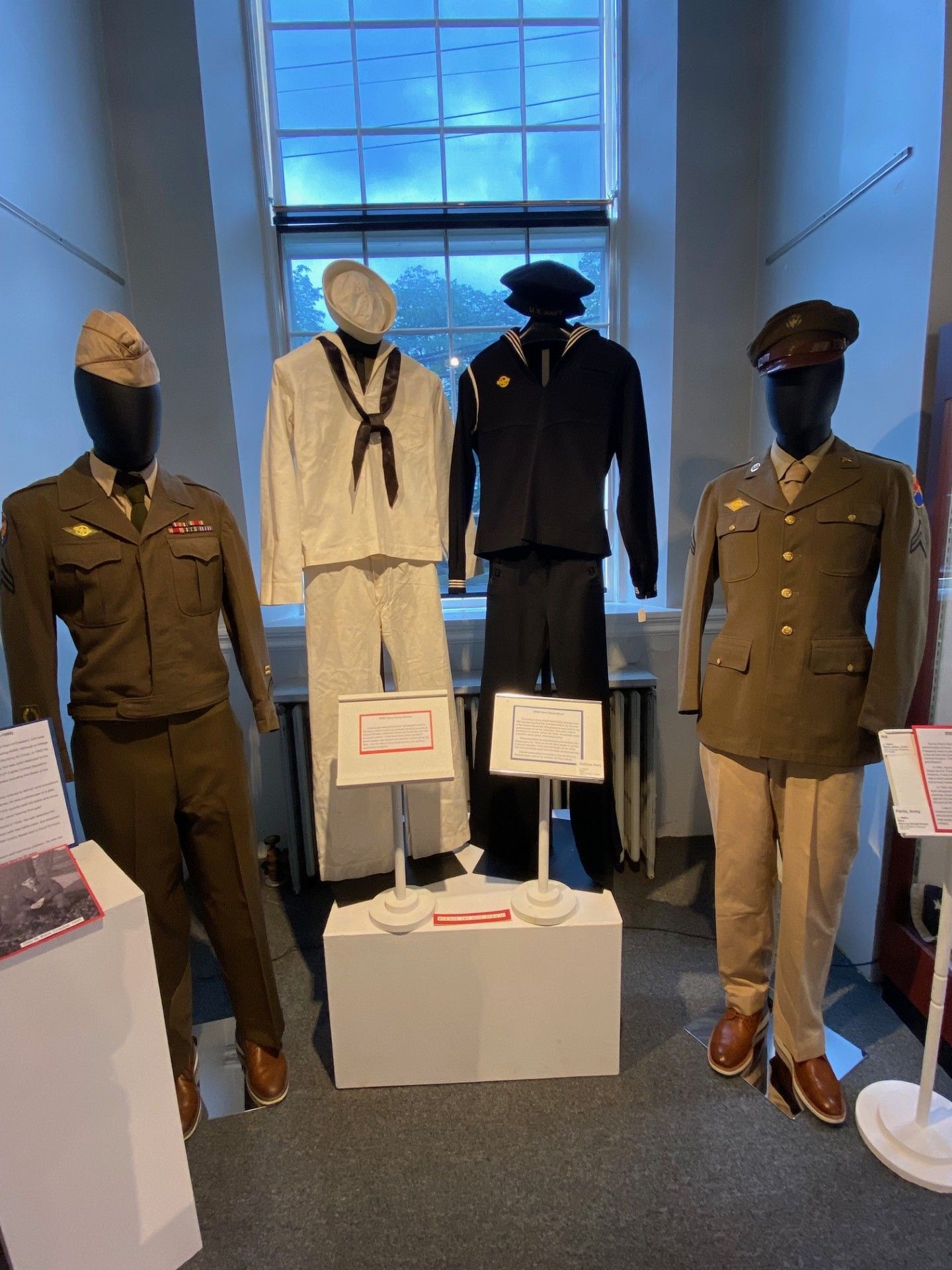
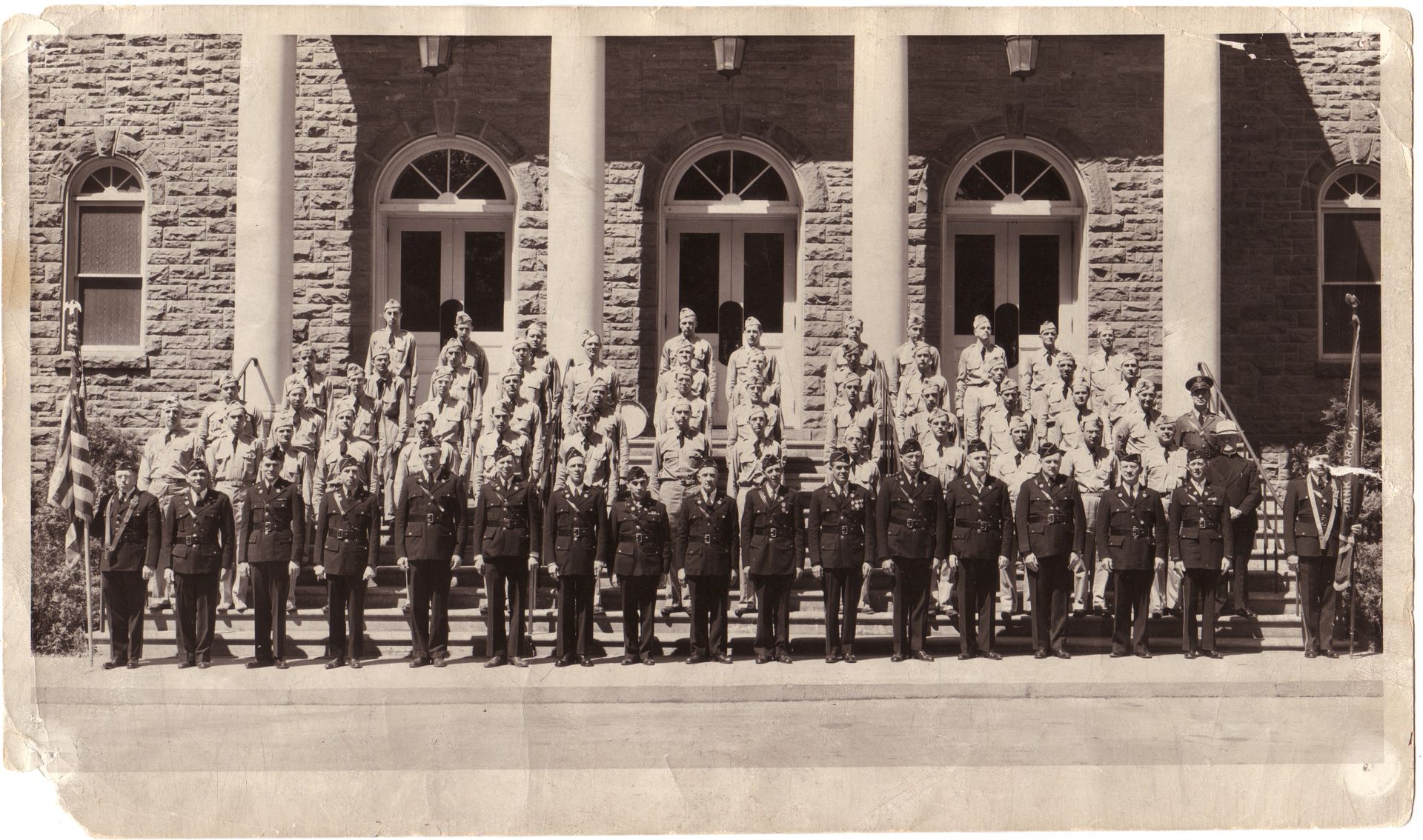
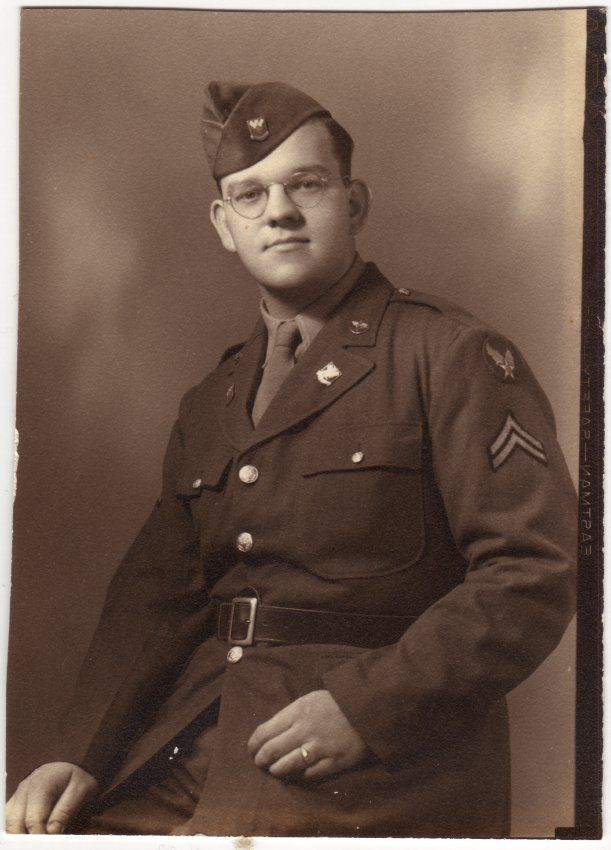
Over the course of World War II, over nine hundred residents enlisted or were drafted.
The Vietnam War saw over 140 residents sent overseas.
The First Uniform
The United States military has had uniform regulations since it was founded in 1775.
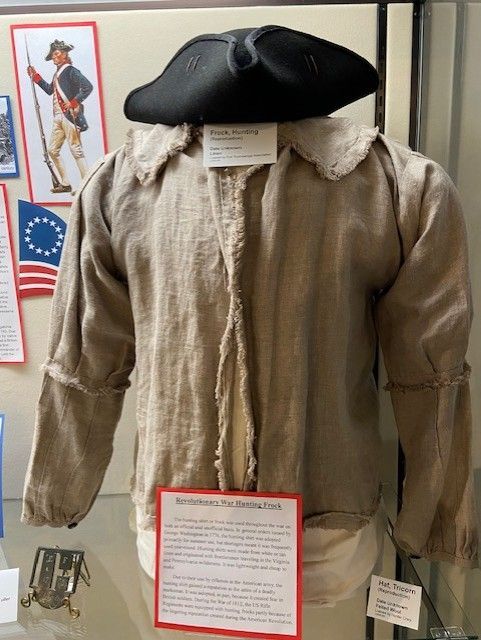
During the Revolution, soldiers often wore either a regimental coat of blue wool with red facings or a linen hunting frock.
The hunting frock became a symbol of fear to British soldiers, who viewed the wearer as a superb marksman. This reputation stayed strong and during the War of 1812, the army's rifle regiments wore green hunting frocks as their summer uniform.
Medals and Ribbons
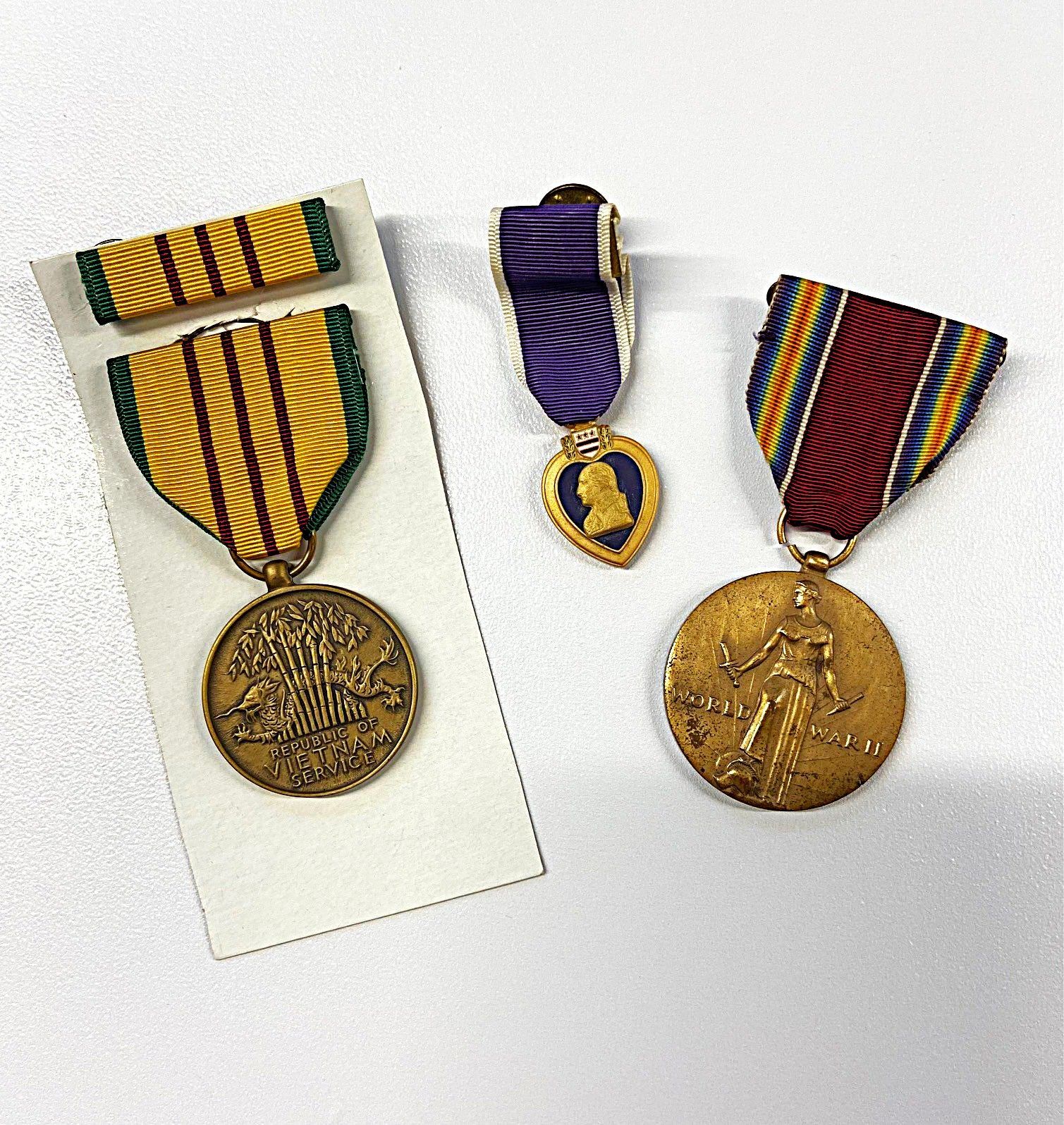
George Washington created the first award issued for American soldiers in 1782. Now known as the Purple Heart, it is awarded to soldiers wounded or killed during war.
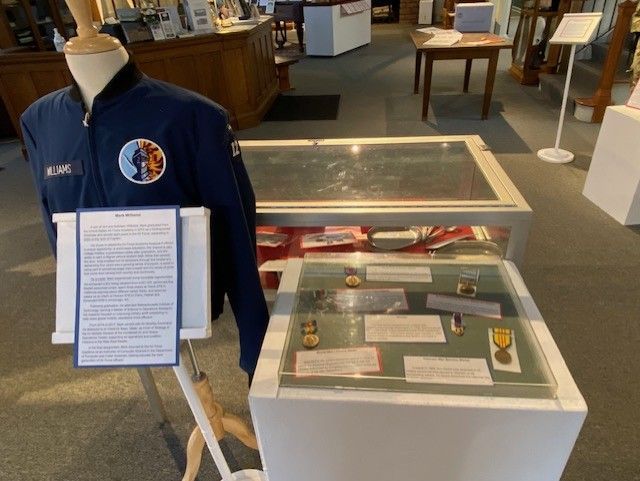
Medals have been awarded for participation in battles, major conflicts, limited military actions, and for meritorious conduct. Soldiers wear the medals with dress uniforms but generally wear small ribbons on their daily service uniform.
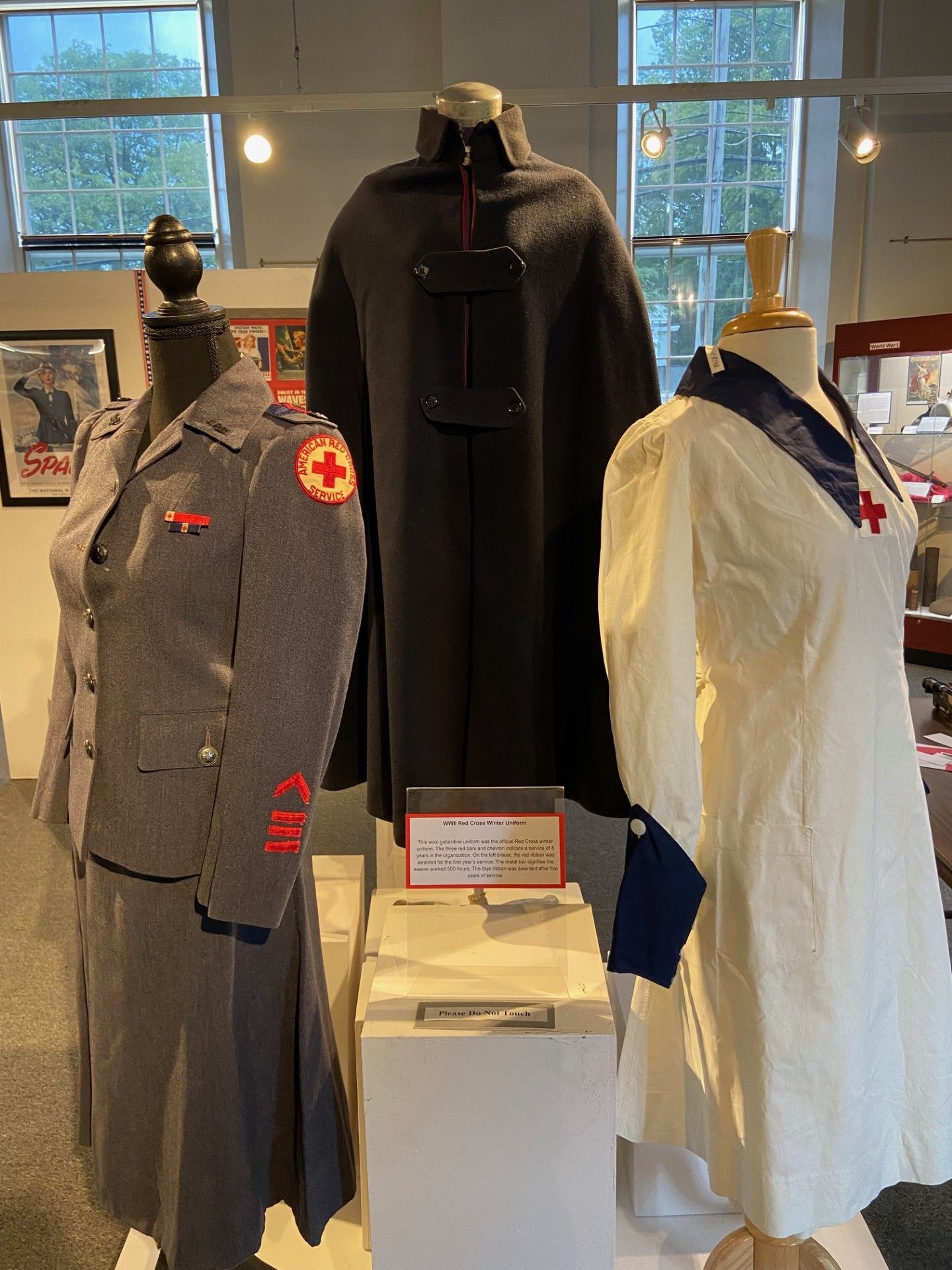
American Red Cross
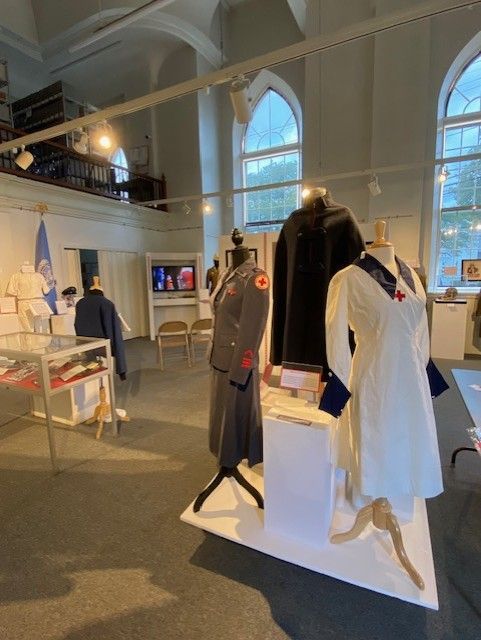
The American Red Cross was founded in 1881 and chartered by Congress in 1900 as the provider of emergency care for domestic natural disasters and the United States military.
World War I was the first US conflict to involve the Red Cross and by the end around a third of Americans were members or donors.
In World War II, over 7.5 million volunteers joined the Red Cross. Sent across the world, members served as nurses in military hospitals, operated food trucks, organized blood drives, provided recreational activities, and delivered letters.
Today the Red Cross provides 40% of America's blood needs, 24/7 disaster relief, medical training, and international aid.
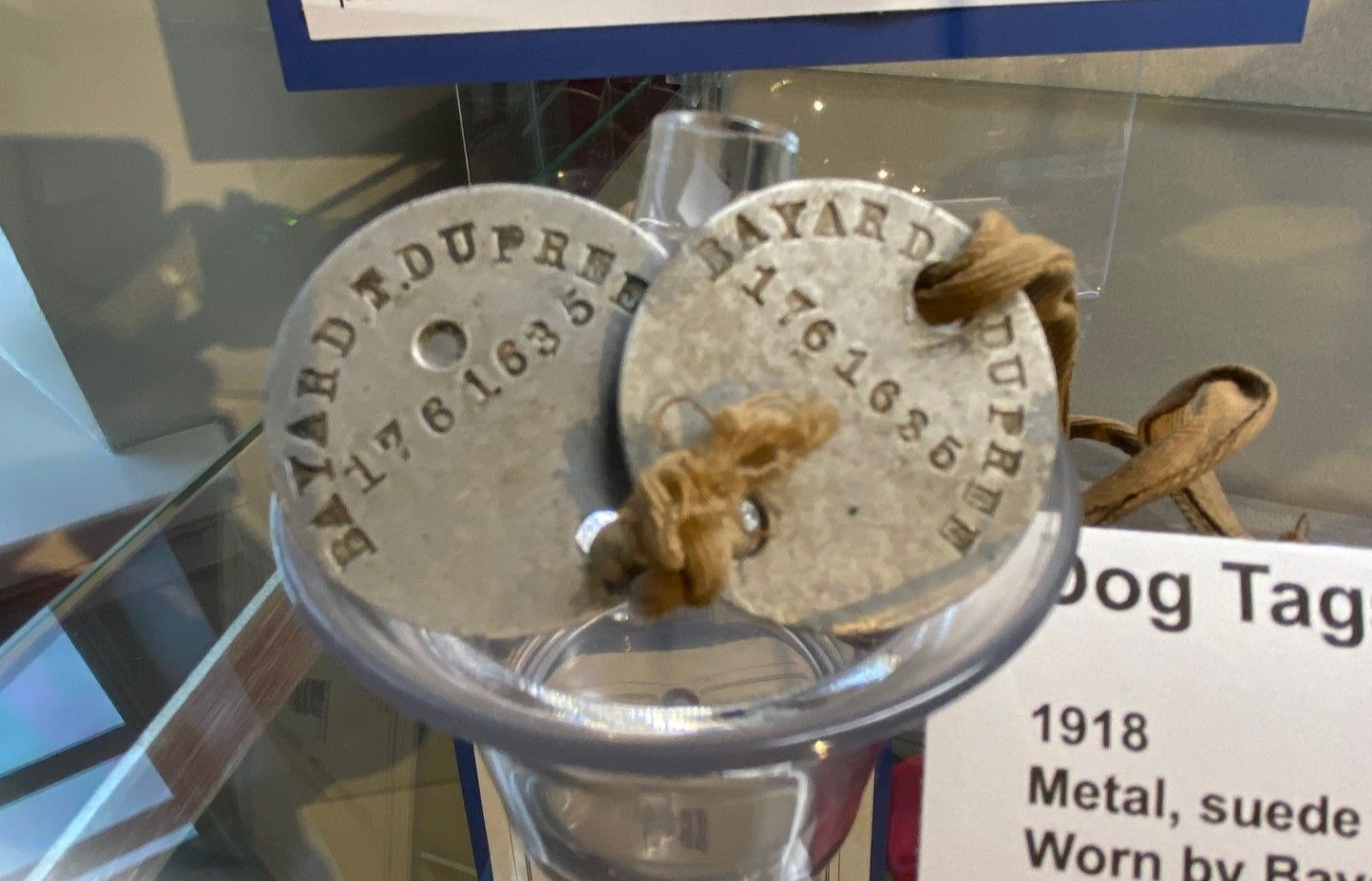
Dog tags
A military identification tag was not officially introduced by the US military until 1906. Prior to this, there were no official means of identifying soldiers and they would often create their own means to identify themselves if they died in battle.
Modern dog tags are stamped with a soldier's serial number, blood type, religious preference, and name.
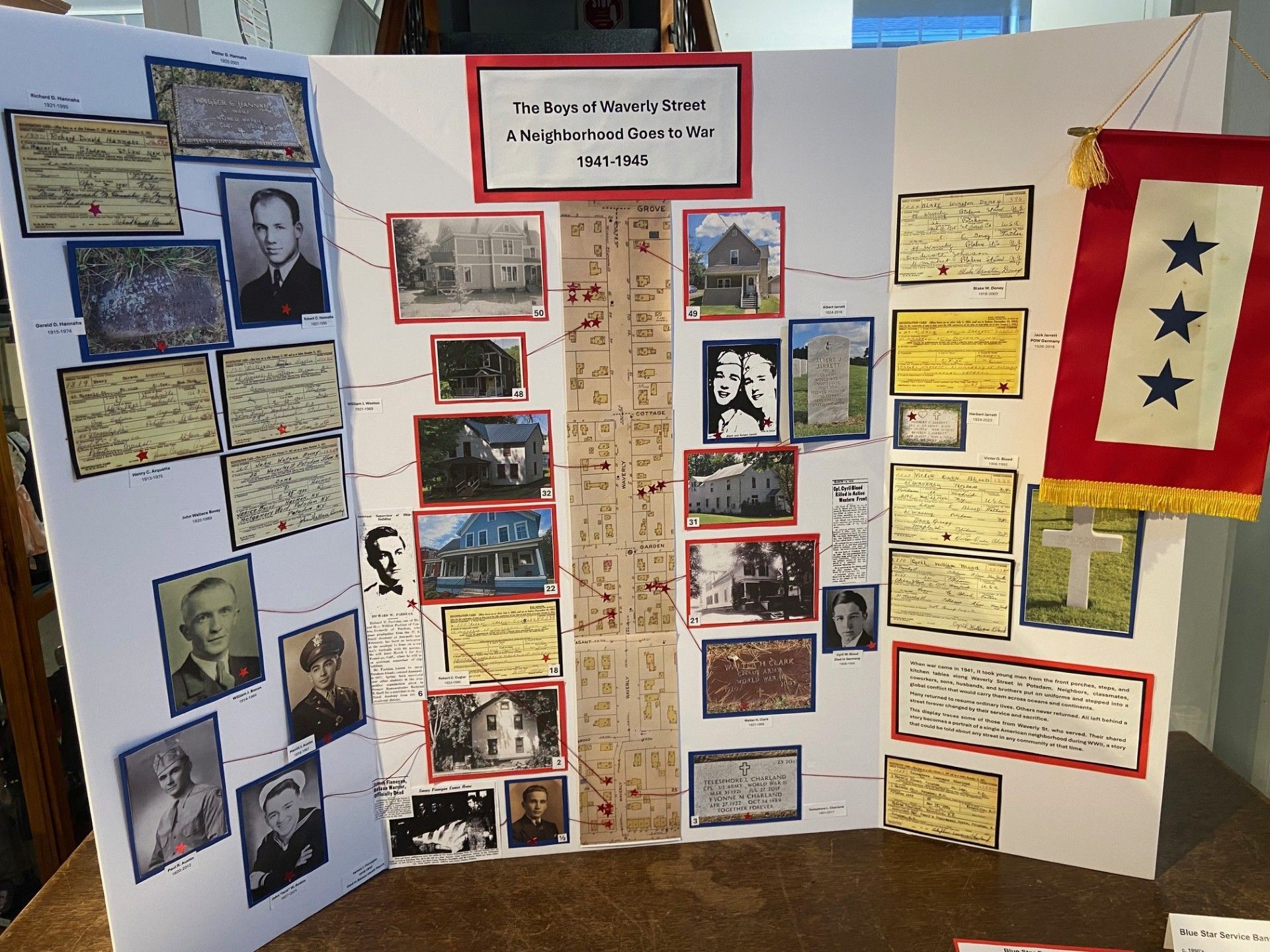
The Boys of Waverly Street
A Neighborhood Goes to War
1941-1945
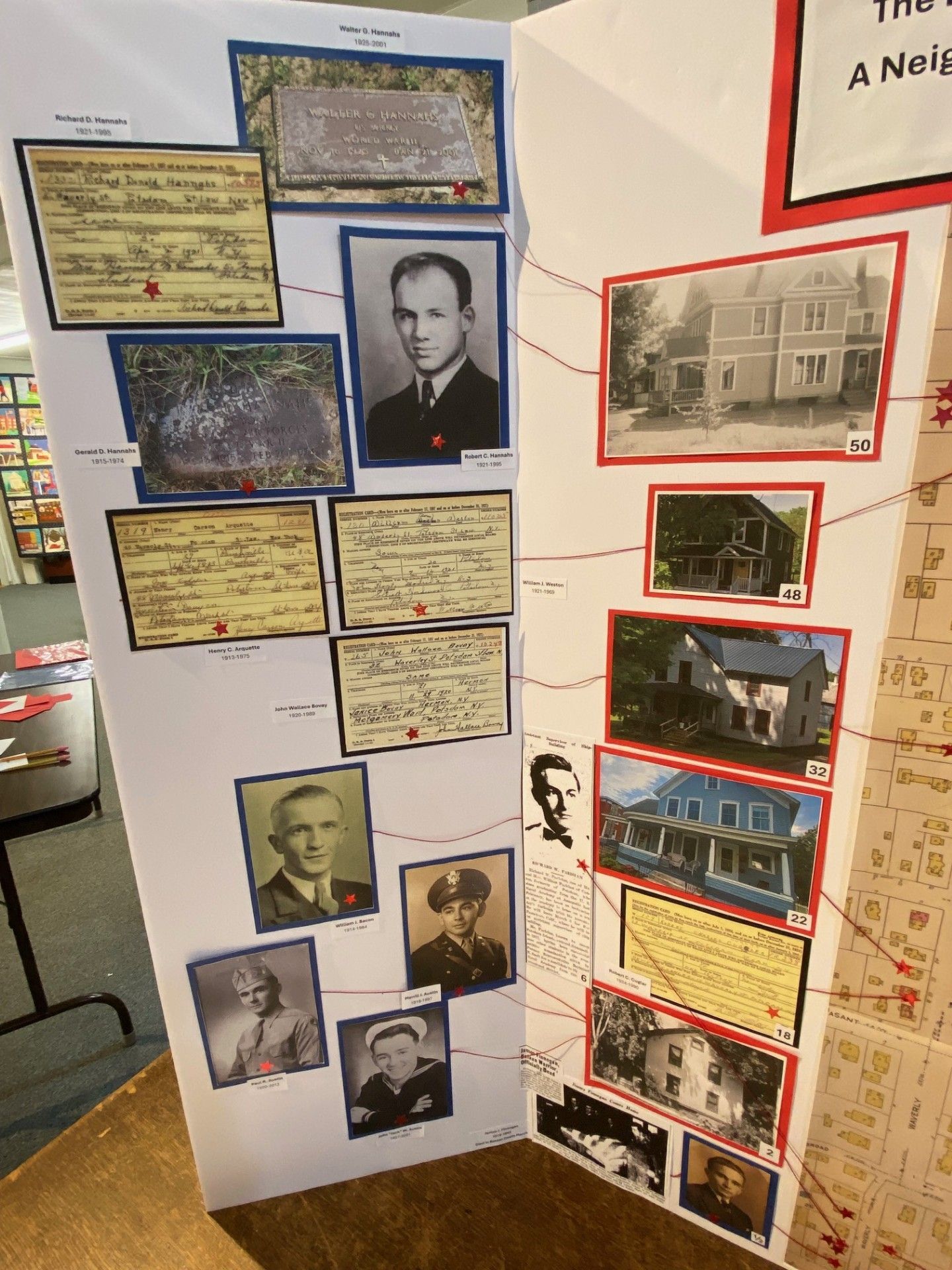
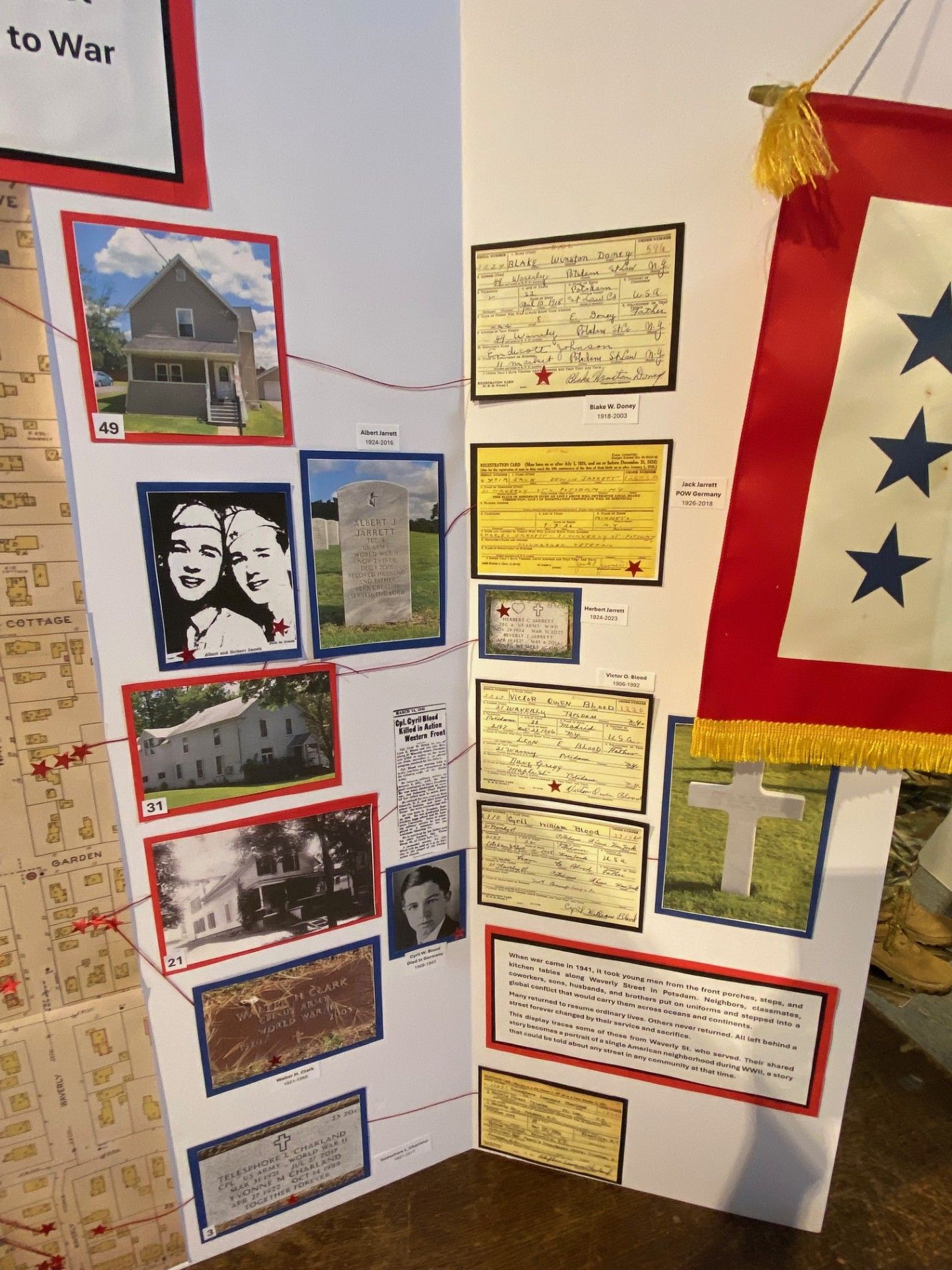
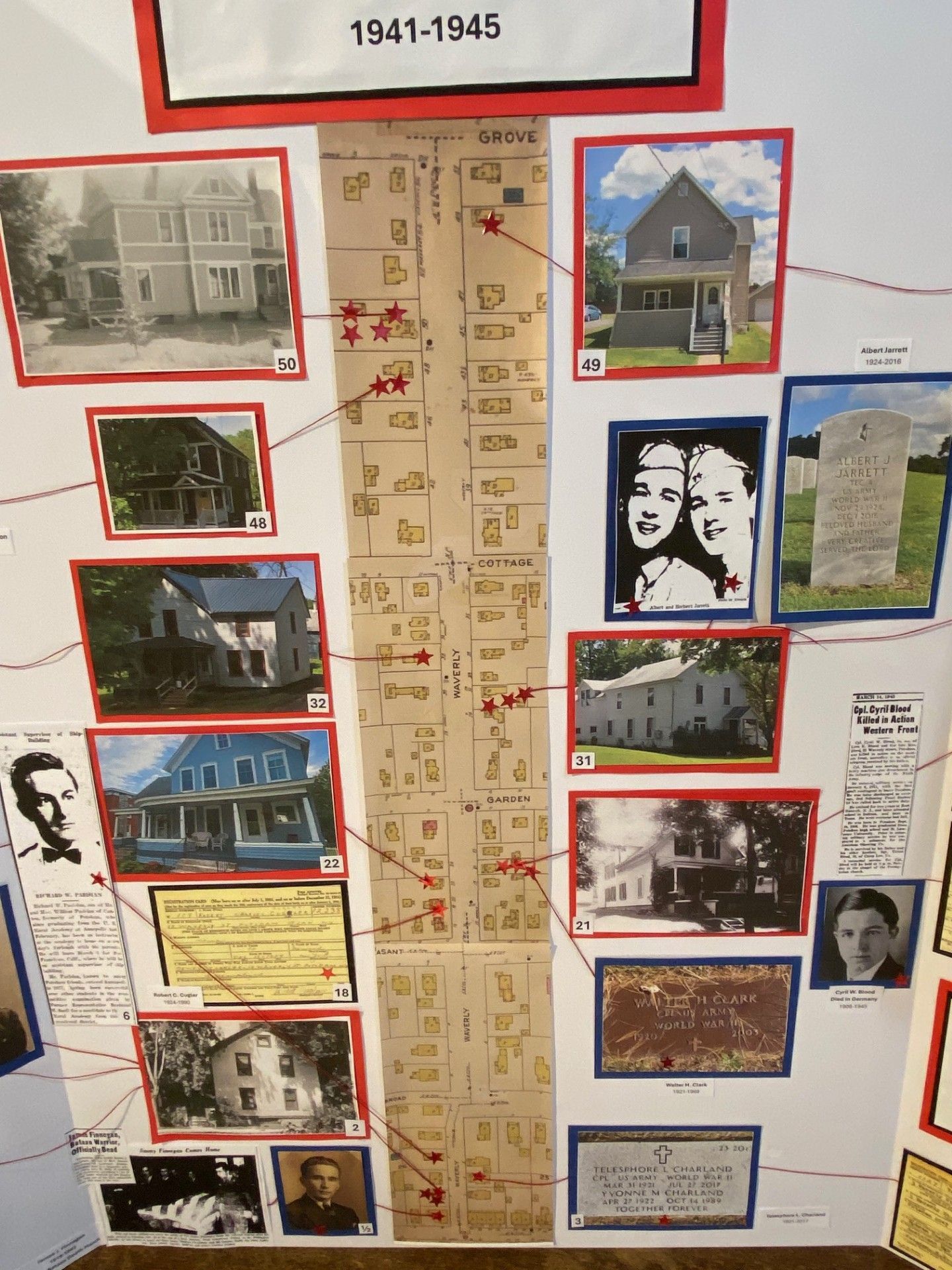
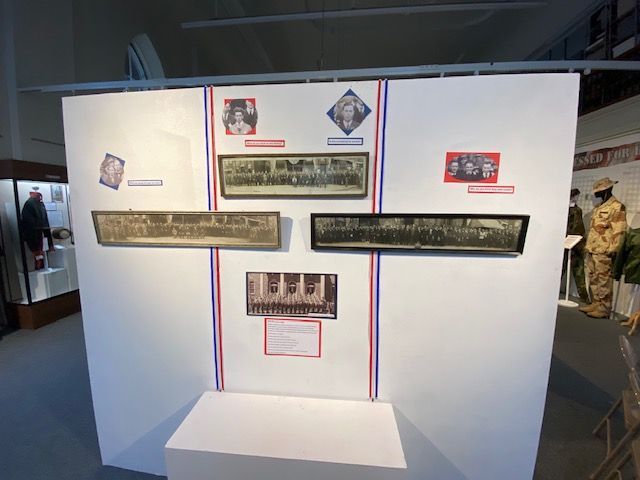
When the United States entered World War II, young men from Waverly Street in Potsdam were drawn from kitchen tables and front porches. Neighbors, brothers, sons, fathers, classmates, and coworkers donned uniforms and traveled overseas to fight in a global conflict.
When the war ended, many returned home to resume their ordinary lives. Others never did. Their service and sacrifice changed a neighborhood forever.
This display traces some of those young men from Waverly St who served. Their shared story highlights the consequences of a global war on a small town neighborhood like many others from the period.